25/12/2025
A New Formula at the Pinnacle of Management: From Hierarchy to Horizontal Structure
For white-collar workers at the beginning of their careers, career goals are generally clear: work hard, prove yourself, get promoted quickly, and eventually reach a management role. Success at work, and for some, even success in life, is considered equivalent to climbing these career ladders.
But what about those who don't follow this path? Is the only way to achieve better working conditions and success to rise hierarchically? Not always. Especially as the presence of Generation Z in the workforce increases, so does the number of those who are turning to different definitions of success. Instead of a promotion-focused career, the number of those who aim for a more horizontal, balanced working life with meanings that align with personal values is growing every day.
The Changing Definition of Success and Leadership
Generation Z, which challenges the mold in many areas, is also pushing the definition of success in the workplace beyond traditional understandings. According to a recent study by Robert Walters, one of the world's leading professional recruitment companies, 52% of Generation Z employees are not interested in middle management positions. According to Deloitte's 2025 Global Generation Z and Millennial Survey, only 6% of employees in these generations see becoming a senior executive as their primary career goal. In this new era where traditional management approaches are being shaken, companies are also transforming themselves. Horizontal organizational structures, where differences in authority and responsibility are smaller and hierarchical gaps are narrowing, are increasingly preferred.
Text in the box: "Organizational structures where hierarchical divides are narrowed are now preferred."
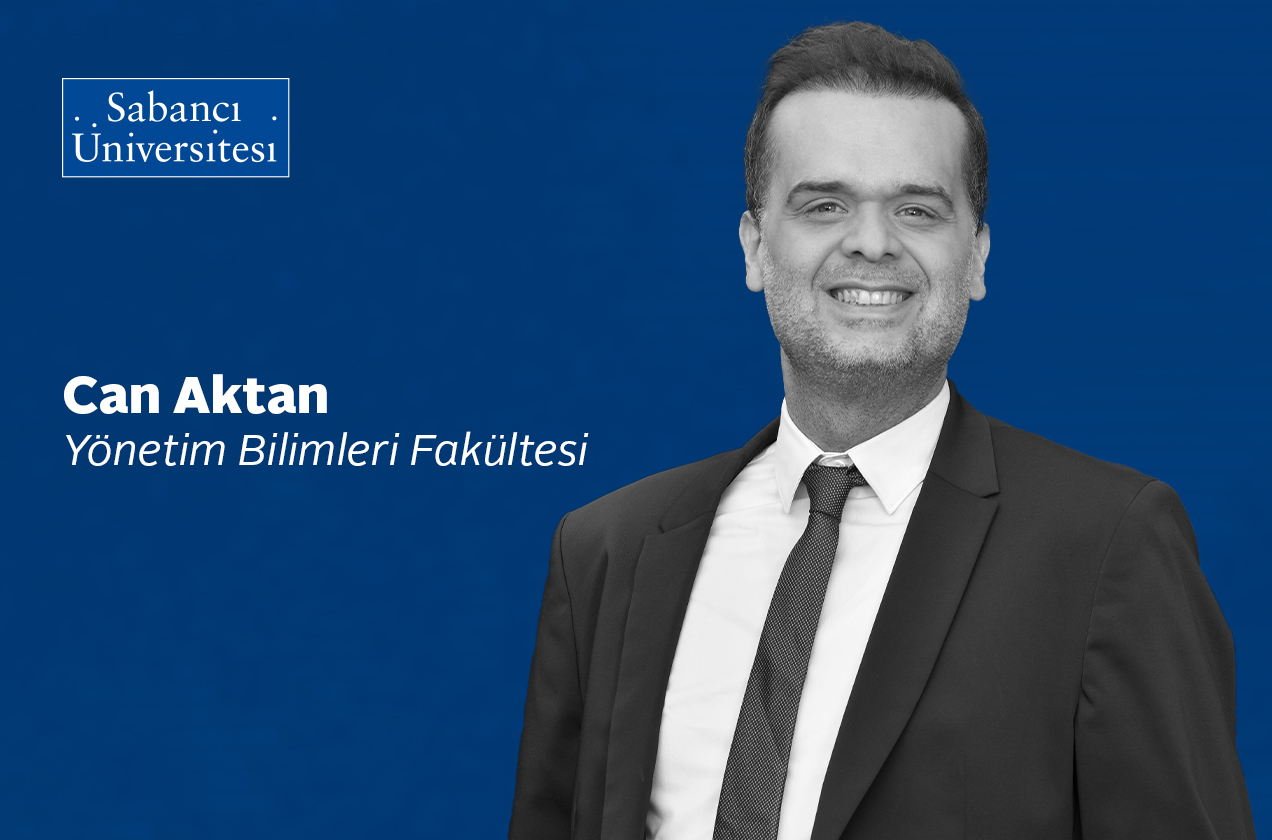
Parallel to the changes occurring at lower levels, a hierarchical transformation is also taking place at the highest levels of companies. A study entitled "Top management teams hierarchical structures" by Aras Can Aktan, a member of Sabancı Business School, and Fabrizio Castellucci from Bocconi University, focuses precisely on this issue. The research examines how a company's leadership structure is organized and its impact on company success. According to the study, published just a few months ago in the journal Long Range Planning, a key element in a company's success is the balance between control and collaboration in its management.
Shifting from Vertical to Horizontal at the Top
Senior management teams consist of top executives who determine and implement the company's strategy. These teams differ in terms of their areas of responsibility as well as their hierarchical structures. Indeed, according to research, in 2021, Johnson & Johnson's senior management members were at the same hierarchical level, while the executives at the Walt Disney Company were positioned at different levels. Current research shows that the more vertical the hierarchy in a senior management team, the more centralized the decision-making process becomes, and consequently, collaboration and interaction among team members may decrease. On the other hand, in teams with a more horizontal hierarchical structure, structural power differences among members are less, and consequently, the level of cohesion and collaboration is higher.
Text in the box: "Vertical hierarchy centralizes decisions; horizontal structure increases collaboration and harmony."
Based on these findings and seeking to understand how hierarchical structures within senior management teams are determined, Aktan and Castellucci examined data from 260 of the 500 largest companies in the US between 2007 and 2018. While the size of senior management teams remained relatively constant over these 11 years, their hierarchical structures became noticeably more horizontal over time.
Even Age Differences in Senior Management Matter
The research also sheds light on the conditions that fuel this vertical-to-horizontal shift. Especially during periods of rapid sector growth, companies increase their flexibility and capacity for collaboration by adopting a horizontal structure; however, in times of intense competition, a more vertical, decision-centered senior management structure can provide speed and stability. Accordingly, the expansion of the sector, the independence of board members, and the presence of a CEO who does not come from within the company reduce the hierarchical distance among senior management team members. The reason is clear: Under these conditions, senior executives feel a stronger sense of belonging to a team. This leads to increased harmony and a more effective decision-making process.
On the other hand, the fact that the CEO also has the responsibility of chair of the board, large age differences among members, the complexity of the company structure, and the diversity of areas of responsibility lead to a more vertical hierarchical structure. This is because a strong control mechanism and hierarchical structure are needed to provide more power and authority to some senior management team members in order to fulfill increasingly challenging job tasks.
In summary, the direction of hierarchy within senior management teams is not merely a characteristic of organizational structure, but also a strategic tool used by companies to adapt to changing market conditions. This research offers valuable insights for taking appropriate steps in the face of the highly unpredictable conditions created by global politics and the expectations of Generation Z, who are now leading the way.
Key Findings
- Companies are reshaping their top management hierarchies to maintain balance in the face of certain challenges.
- During periods of rapid sector growth, shifting from a hierarchical to a horizontal structure facilitates flexibility and collaboration.
- In times of intense competition, a top management structure that allows for quick and decisive action is preferred.
- Looking at the 11-year period examined, the new trend in top management is a horizontal hierarchical structure.
For the full article:
Aktan, A. C., & Castellucci, F. (2025). Top management teams hierarchical structures: An exploration of multi-level determinants. Long Range Planning, 58(3), 102515. https://doi.org/10.1016/j.lrp.2025.102515
Link to professors' biographies and other research:
Aras Can Aktan:
https://sbs.sabanciuniv.edu/tr/can-aktan
https://www.researchgate.net/scientific-contributions/Aras-Can-Aktan-2199005614
Fabrizio Castelucci:
https://mgmt-tech.unibocconi.eu/people/fabrizio-castellucci
https://scholar.google.com/citations?user=clBM4_gAAAAJ&hl=en
Prepared by: Gökçe Çalışkan